abraham lincoln abraham maslow academic papers africa aging aid alexander the great amazon america android os apple architecture aristotle art art institute chicago astronomy astrophysics aubrey de grey beck beer berlin bernacke bicycle BIG bill murray biophilia birds blogs bob dylan books bourdain brewing brian wansink buckminster fuller bukowski cameras cancer carl jung carl sagan cemetary change charter city chicago china christmas church civil war climate change cologne construction coop himmelblau copenhagen cornell west cps craigslist crime crown hall cyanotype cyrus dalai lama darkroom data dbHMS death design build dessau detail Diet dogs dome dongtan douglas macarthur drake equaation dresden dubai ebay eco economics economy education einstein emerson emily dickinson energy experiments facebook farming finance finland florida food france frank lloyd wright frei otto freud frum funny furniture games gay rights gdp george w bush george washington germany ghandi glenn murcutt goals good google government graphic design guns h.g. wells h.l. mencken hagakure halloween health health care henri cartier bresson herzog and demeuron honey housing human trafficking humanitarian efforts hydroponics ideas iit indexed india industrial design industrial work internet investments japan jaqueline kennedy jim cramer john maynard keynes john ronan john stewart journalism kickstarter kings of leon kittens krugman kurt vonnegut kurzweil lao tzu law le corbusier ledoux leon battista alberti links LSH madoff malcolm gladwell marijuana marriage masdar city math mead medicine microsoft mies van der rohe military milton friedman mlk money movies munich murphy/jahn music nasa nervi neutra new york nickel nietzsche nobel prize norman foster nsa obama occupy open source paintball palladium print paris parking party passive house paul mccartney persia philip roth philosophy photography picturequote pirate bay pirating plants poetry poker politics portfolio potsdam predictions prejudice presidents process photos prostitution psychology public housing q and a quotes rammed earth randy pausch reading reddit regan religion rendering renewables renzo piano restaurants revolution richard meier richard rogers robert frank rome rubik's cube rule of 72 rumi san francisco sartre sauerbruch hutton saule sidrys schinkel school science screen printing seattle sesame street seth roberts sketch social media soviet sparta spider spinoza sports stanley kubrick stanley milgram statistics steinbeck sudhir venkatesh suicide sustainable design switzerland taxes technology ted teddy roosevelt tension terracotta tesla thanatopsis the onion thomas jefferson thoreau time lapse tommy douglas transportation travel truman tumblr unemployment urban design van gogh venezuela vicuna video video games wall street war werner sobek wood woodshop woodworking ww1 ww2

02 March 2013

Architecture Software

One of the questions everyone asks in architecture school is, what programs do firms use? So here's my list.

For my professional work at Loebl Schlossman & Hackl:
  • Drawings in Revit. Sometimes with consultants we have to use AutoCad for coordination but not much.
  • Microsoft Word and Excel for spreadsheets and formal communication.
  • Outlook for email.
  • IE is still the standard browser...
  • Marketing, presentations, photos, etc. get done in Indesign, Photoshop, and Illustrator.
  • Project organization gets done in Newforma.
  • Mark-ups to consultants in Adobe Acrobat Pro.
  • Simple rendering gets done in Revit via their cloud rendering. For nicer stuff we use a consultant, usually from China.
  • For specs we use Specwriter.
  • Vision for billing, client management, and human resources tasks.
  • For file organization everything is just in folders with project numbers and a standardized set of folders (ie, consultants in, consultants out, SD, DD, CD, etc.).
For my personal work it's a bit different
  • Code review, organizing my documents/PDFs/specs, browsing, etc. is all done with Google products. I use Chrome with the Evernote Web Clipper extension. Evernote has really exceeded my expectations and is an incredible archiving tool. Everything gets a folder in Evernote which is shared with a link inside a Google Drive document. It's easy to to share, convert to multiple formats, collaborate with others, and it's stored in the cloud so I can have access to it anywhere.
  • Drawings get done in some combination of a Moleskin Squared XL (shut  up), Rhino (very fast and easy to work out ideas), and Revit. Sometimes I hand draft just because it's easier for me to work out problems.
  • Rendering is done with Maxwell Render as a plugin through Rhino. Maxwell just added support for Revit so that'll make life easier at some point.
  • Graphics, photos, etc. is some combination of Indesign, Photoshop, and Illustrator.
A few notes. AutoCad won't go away anytime soon, but Revit is the future.There are many criticisms but it's a very powerful program. Don't hate, adapt. Also, 3DS Max is the way to go with rendering if you use Revit. Rendering is very important in school and not very important in real life. It's not that simple of course. Renderings do after all sell jobs, but they're just not as important in a firm setting. The biggest difference between school and a firm is that everything needs to get done quickly. You can't make drawings in Rhino then adjust your line weights in Illustrator after every set you issue. You can, but you're not going to be compensated for your time. Figure out a work flow that works and figure out how to refine it. 90% of what I do all day is Revit > PDF > email for drawings or Photoshop/Illustrator > InDesign > PDF for presentations.

17 February 2013

Picturequote

The more one sees of human fate and the more one examines its secret springs of action, the more one is impressed by the strength of unconscious motives and by the limitations of free choice - Carl Jung
I really can't escape the fact that I have an innate need to build things. Design is feckless without the tangible aspect of the feedback loop, so I've started putting together what will eventually be a wood/metal workshop.

I didn't realize until typing this out, but this is the first time I've never had access to a workshop. We torn down my family's while I was in grad school and during that time I had access to IIT's shop.

I went to an auction for a cabinet maker that was going out of business (Bolhuis Woodworking Co.) and bought a bunch of hardwood and old industrial woodworking machines. More pictures and details to come. It'll certainly be interesting.

My friend Kevin (pictured) and Derek helped me load up the roughly 1,500 BF of maple, white oak, mahogany, etc., and some old Delta Rockwell machines into a truck on the coldest day of the winter.

Walnut Light Boxes for Medium Format Film

My friend Dan had an idea for some light boxes for 120 film (medium format), so we got together and figured out how to actually make it. After a trip to the lumber store and a whole day in the wood shop this is the tentative result. I'll post more pictures and details when they're fully completed.

Dan got this featured on a blog called Shooting Film.

The slide film is roughly 2-1/4" square (70mm, 120 film) shot with a Mamiya C330.


Donating Your Idle Computer Time for Scientific Research

I've been hearing about networked super-computing for a while now so I thought I'd check it out this weekend by setting up my computer on the BOINC network. It was originally designed for SETI@home and later expanded to other areas of scientific research. I signed up for SETI@home (search for extra terrestrial intelligence), POEM@home (protein optimization with energy models, medical research), World Community Grid, and a few others.

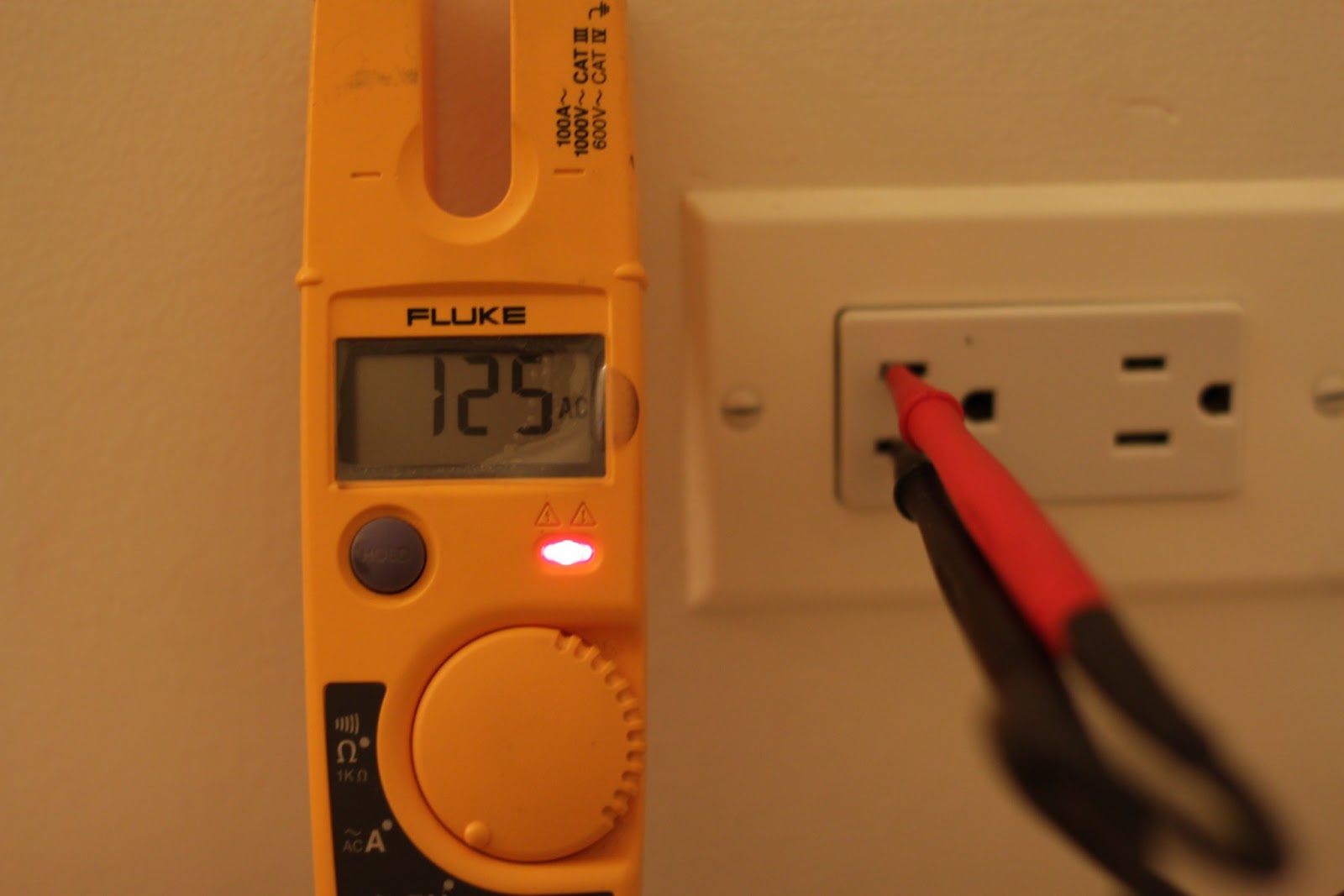
My computer is fairly well suited for it too since it's overclocked, water cooled, and has a high-end 8-core processor, but I was curious about the energy usage. I have an electrical tester and I made a short extension cord with individual wires so I can measure amperage (second photo).

First check the voltage.
This is the computer at idle / regular light use., 0.4 amps.
This is the computer running BOINC (100%  CPU and GPU), 1.4 amps.
Voltage x Amerage = Watts
1000 watts in one hour = 1 kilowatt hour (kWh) = $0.10 in Chicago

Idle / typical  -       50 watts (125V x 0.4A) =   12 cents/day, $3.60/month,   $44/year
Running BOINC - 175 watts (125V x 1.4A) = 42 cents/day, $12.60/month, $153/year

There's also a lot of heat given off by the computer, 3.4 BTU's per watt/hour. That's about 600 BTU's (that'd be like adding three people to a room). For what it's worth I figured that during this January it took an average of 6,000 BTU's/hour to heat our apartment (all glass walls, all electric heat... ugh). Long story short it makes sense for me to lend my computers processing power during the cold months in Chicago, but as soon it gets warm out it would start to impose a decent burden on me since I'd have to both pay for the electricity for the extra processing power and the additional AC required to cool said heat generated by the computer. In the mean time I might as well let my computer crunch numbers as opposed to letting the electric baseboard heaters do essentially the same thing without finding the cure for cancer or ET.

And now the real point of this post; networked infrastructural sharing as it relates to electrical generation - it has many other applications too.

The key insight here, as it relates the networked computing, is that there is an enormous amount of power generation potential in the form of idle cars - just like idle personal computers. Our collective cars have over 35 times more power generating capability than all the power plants in the US. Each power source is about as efficient as the other1.

The way electrical distribution works right now is fairly straight forward. A network of large plants create huge amounts of energy, mostly from burning hydrocarbons, and then send it through a network to users.

large scale power generation > network > end user

Large power plants are being built at a much slower rate than in the past. Micro-scale sources like solar now make up the majority of added power generation. The paradigm seems to be shifting to:

small scale generation that's very spread out / end user > interconnected grid > end user

Basically, energy and distribution is increasingly starting to look like how the internet works. To be fair the actual numbers are quite low right now, but the trend is rather stable. Over the last decade there has been more capacity added to our electrical grid in the form of micro power sources (solar panels and the like)(comparable to my single personal computer) than there has been traditional large scale power plants (comparable to a super computer).

To add to this, if cars were electric they could plug into the grid and act as a sort of buffer for renewables and traditional power plants. It seems that by distributing the generational capabilities it would become more stable in both reliability and potentially price since the market paradigm would shift from monopolies to pure competition (this is a bit facile but I don't want to get off topic).

This is a trend that is apparent in many other aspects of our lives and technologies, but I chose this example because it made me think about my incentives to loan my computer to scientific research. Currently if you have solar panels on your home and you generate more power than you consume it goes back into the grid2. The systems are designed to try to balance out your use and how much your array generates because, at least in Illinois, the utility company won't give you any money if you generate more power than you use. It's really dumb. It creates no incentive for people to add additional capacity. Currently networked supercomputing is viable because it's for a good cause, but why not use it for business purposes too and actually pay users for their resources? It'd be like Zip Cars except Zip car doesn't even need to buy cars, so long as the numbers make sense it seems like an efficient thing to do. In this case especially since nothing tangible is actually being handled by the borrower.

The question is no longer, will solar take off? Is wind viable? Yes, it can be and it's increasingly the reality we live in - which I'm excited about. The real question is how will the incentives be aligned? Will we invest in a smart grid to share our personal small scale power generation capabilities? Will electric cars that act as an energy bank become the norm? Will people get paid to generate power, to let their car drain a bit at 1:00 PM on July 1st when everyone in the US has an air conditioner running? What are the liability laws like if you generate lots of power in a remote area then cut it off leaving others without power? These are serious legal and infrastructural questions that will shape our coming world.

As the rate at which technology advances increases it seems that many of our most pressing problems are political in nature. People have to come together and do some big things. Technology advances exponentially whereas human understanding and will power do not, and it's becoming increasingly apparent. I work for men who are a few generations ahead of me. I learn a lot from them and vice versa, but they're also stuck in a world that's very pre-1990's America. Expensive office space. Everything of value is tangible. Exploitation of workers is the profit margin. Microsoft Office. Email addresses provided by your ISP. These people control our world and I'm not convinced they're aware that the internet and all that comes with it has radically changed our world.

1 - The average car is about 25% efficient while a power plant is generally in the low 30's then some distribution loss.
2 - It's called a net meter. Your meter literally spins in reverse when you're generating more power than you're consuming.

02 February 2013

Government Spending: Low and Falling

Just a quick note about an article by Paul Krugman that appeared on his blog today.

Krugman posits that the increase in government spending is mainly due to two factors.

1 - Since the economy has contracted, government spending is going to make up a larger percentage of GDP. Pretty straight forward.

2 - More people are unemployed and are thus collecting from various social safety nets: unemployment, medicaid, food stamps, etc.

The blue line is government (at all levels) spending as a percentage of GDP, so in the last 25 years it was fairly consistently was between 31%-34% of GDP. I'll also note it fell under Clinton and rose during W, although not by too much. Today it's 36%, actually not that high, relatively speaking. The red line is this same measure but as it relates to potential GDP. Basically, what our economy can and should produce. This number is about 34% which is much closer to the trend for the last 25 years.

Source: Paul Krugman's Blog: The Conscience of a Liberal

So there has been some increase in government (again, this is all levels of government, not just federal) spending, but a large portion of it is clearly due to our economy contracting (red line). If one considers #2 from above then it becomes clear that our government, sans safety net programs, has actually contracted in the last several years. This is extremely troubling. 

Politics and our general inability to come together as a nation and implement our hard won knowledge (see Great Depression) has prolonged this recession and harmed many lives in the process. This isn't "oh we just don't have quite as much money..." This is more young people committing suicide, high school students skipping college, older workers not being able to retire when they planned to (even when working class people's life expectancy has stagnated. Source: 1, 2), and increasing rates of depression that are no doubt related to the inability to find a decent paying job. Bad things happening are a fact of life, but watching them happen when they're largely preventable is tragic

30 January 2013

It's Official: Petitions to Whitehouse.gov Are About As Effective As The Close Button On Elevators

They're vestigial. At best they make you feel like you're doing something.

Here's the one that originally tipped me off. The White House won't even comment on it. It's one thing to say you won't enforce federal laws that contradict states laws, but it's another to see an injustice happen and then willingly turn a blind eye. Why does the Obama Administration never comment on marijuana laws? He acts likes it's the ultimate taboo. Gay marriage and weed - the two issues that my generation does not understand the illegality of.

Here's a current one brought on because the Justice Department was in the process of ruining Aaron Swartz's life for downloading the JSTOR library. Heaven forbid someone get their hands on... peer reviewed papers funded by the public..?

29 January 2013

Working At the Farnsworth House

I've been occasionally helping out a former professor of mine, Frank Flury, with one of his projects on the Farnsworth House site in Plano, IL. For those of you who are unacquainted it's considered one of the most significant works of architecture built in the 20th century. The architect was Mies Van der Rohe, patron saint of IIT.

Frank built some nice doors using all wood joinery. I've never built a door from scratch, so it was nice to see it all go together.

Frank and Roland. Roland is an insane artist. He paints these huge acrylic paintings of steel structures that look like photographs. In the background is the Barnsworth project. The Farnsworth House sits on a flood plane so a place to house some of the significant furniture, specifically the dresser, was needed. 

Didn't have a tripod so I used the timer and a rock.

This was the last day that it was open during the season so we went in after hours and drank some whiskey.
It was much more pleasant than I would have imagined. The site at night lends itself to privacy and the home is very intimate; perfect for drinking with several people.

10 January 2013

Dieter Rams 10 Principles of Good Design


Dieter Rams was an industrial designer for Braun and a bunch of other product manufacturers. I find myself continually quoting this so I figured it was time to post it. Along with "less, but better", these are his ten principles of good design:

Good design...

Is innovative - The possibilities for innovation are not, by any means, exhausted. Technological development is always offering new opportunities for innovative design. But innovative design always develops in tandem with innovative technology, and can never be an end in itself.

Makes a product useful - A product is bought to be used. It has to satisfy certain criteria, not only functional, but also psychological and aesthetic. Good design emphasizes the usefulness of a product whilst disregarding anything that could possibly detract from it.

Is aesthetic - The aesthetic quality of a product is integral to its usefulness because products are used every day and have an effect on people and their well-being. Only well-executed objects can be beautiful.

Makes a product understandable - It clarifies the product’s structure. Better still, it can make the product clearly express its function by making use of the user's intuition. At best, it is self-explanatory.

Is unobtrusive - Products fulfilling a purpose are like tools. They are neither decorative objects nor works of art. Their design should therefore be both neutral and restrained, to leave room for the user's self-expression.

Is honest - It does not make a product more innovative, powerful or valuable than it really is. It does not attempt to manipulate the consumer with promises that cannot be kept.

Is long-lasting - It avoids being fashionable and therefore never appears antiquated. Unlike fashionable design, it lasts many years – even in today's throwaway society.

Is thorough down to the last detail - Nothing must be arbitrary or left to chance. Care and accuracy in the design process show respect towards the consumer.

Is environmentally friendly - Design makes an important contribution to the preservation of the environment. It conserves resources and minimizes physical and visual pollution throughout the life-cycle of the product.

Is as little design as possible - Less, but better – because it concentrates on the essential aspects, and the products are not burdened with non-essentials. Back to purity, back to simplicity.

06 January 2013

Sunday Reading

On having ideas, being creative, productive, and following through. New York Times

Real talk on investment advice. Reddit

An explanation of why Afghanistan is always at war. Reddit

The chief economist at the IMF, the guy who wrote my undergrad. econ. text book, admits that austerity in Europe has been more harsh than he expected. Washington Post

A succinct and useful explanation of what Obamacare does, when it happens, and all with sources. Reddit

The images that were placed on the Voyager spacecraft that was launched in 1977 that are currently at the edge of our solar system and the furthest objects ever sent from earth. Imgur

Analog bird call music box. Colossal

Perspective

Yesterday I went to a memorial service for the son of a former professor from IIT. His son was twenty years old and had brain cancer on and off for roughly four years. The whole event was very beautiful. The speeches were truly excellent. From what I gather, I did not know him, he was much loved, very intelligent, inquisitive, and in general just the type of person this sort of thing happens to - a good soul.

I saw a former classmate there that was a year ahead of me. I had heard at some point that he himself had been diagnosed with a brain tumor, that turned our to be malignant, since leaving school. His Facebook profile picture for a bit was a photo of him with a rather large incision that went from above his left ear to the middle of his crown. He had his last radiation treatment a week ago. I can only imagine the poignancy of the event from his perspective.

My friend told me how he had pounding headaches but because of a mix-up with his and his wife's insurance through her university they were unable to get healthcare for a time, so he waited to get professional help. When he finally had coverage he went and got a check-up and discovered the news. On one level I was saddened and on another it infuriated me. What is the point of modernity if not to prevent such situations? We give up much for it. No sane person honestly wants to work in office buildings and grow weak for lack of exercise. If we cannot at least provide this comfort then why bother at all?

When I was in high school my mother was diagnosed with stage III breast cancer. The insurance company moved out of the state, as they were legally allowed to every seven years, and dropped coverage for her. Our laws, at the time and for a short while longer, do not prohibit insurance companies from discriminating based on previous ailments. What sane person would wish this upon anyone? And yet it's a reality of the society that we have created.

Perspective is perhaps the most fleeting of all human experience. Nearly the moment we are released from a profound occasion our mind travels elsewhere... "how am I getting home, man; I'm hungry, I wonder if I can get those shoes in black..." The transition in your mind often goes completely unnoticed. I try often to keep perspective: how lucky I am, what I want to achieve, the burdens of the average person I do not have to deal with, but it's a constant effort. Our world is increasingly becoming a comfortable place for a person of moderate means; more so than at any point in history really. At the same time, the tools to effect change are nearly ubiquitous at this point. I encourage you to take advantage of them.

16 December 2012

Picturequote

This was the coach of my paintball team. He and the head photographer from P8NT Magazine ended up in fairly high-up positions in the Obama campaign. Just before the election, maybe two weeks or so, I had a few beers with both of them and some of their co-workers; all of who just happened to be the heads of their departments. My coach is an epic story teller. Not so much because his oratory skills are great but more because he can piece together the truly significant parts of a story that typically escapes others. He's also not prone to embellishment like most, so you know that everything he's saying is, if anything, understated.

Anyways, I show up late and basically get the best introduction ever as he has recently told them the story of our paintball team (apparently one guy has dibs on the movie rights). They were impressed, which is unique for me because it's usually hard to get past even mentioning paintball before the giggles and misunderstanding begins. It spans about seven years and involves the same core group of kids, being broke, going from decent novices to pro, long road trips, eccentric personalities, and plenty or moral dilemma. Sometimes I forget how all that felt, but this passage from Lao Tzu reminds me of what it was like to be that age and have those experiences.
In the pursuit of knowledge:
everyday something is added.
In the pursuit of enlightenment:
everyday something is dropped.

Photo by Dan Mouradian on a Mamiya 6x7. This was a Polaroid test shot. It was taken for a P8NT Magazine gear guide in my parent's basement... moonshine and sharpies ensued.

06 December 2012

Work Holiday Card


Just finished this mock-up for work. The text is just stand-in until we actually do find a cause to donate to. The starting point for this poster was stolen/borrowed from the Rome Prize 2012 poster.

The final deliverable for this is just an email, but... I couldn't help but make it 1:1 (there's scales in there!). The original version is 48" x 72" at 300 dpi; there's a decent amount of white space.

The process to make it was fairly straight forward: scan the objects, run a clipping path/magic wand in Photoshop, edit to your taste, build a hexagonal template, layout the pieces, change colors of some objects, CTRL+C/CTRL+V and rotate.