I love trees, fractals, and polymaths. Hence, I found this article on the branching of trees interesting. Basically, the thickness of all the branches of a tree combined are the same at any height. So if the diameter of the trunk is say 3' near the ground then all the branches at any given height will have a cross-sectional area of 3'.
An app that gets around the NYT's firewall. It works flawlessly and it's free.
If I wasn't doing architecture this is something I'd pursue... intaglio-type photo printing. This guy, Justin Myer, is an acquaintance of a close friend of mine, Justin Santora, and they've traded some work in the past - it's really nice stuff. The process is really fascinating too.
Some truly fantastic older photos.
Architecture I've been looking at: small house, wood, video... how the? With boilers!
The economy is bad. It's going to remain that way for the foreseeable future. No recovery, any time. Get it? Not happening. If you hear otherwise it's just spin, lies, ignorance, or some combination thereof. The fastest way out is of course spending (aka stimulus). Doesn't matter how it happens. First, a history lesson then a more recent one. Read them both or do not talk to me about the economy. Wonk note: 2.5% of GDP is huge. The US needs 2.5% (or so) real (as in, above inflation) GDP growth just to keep up with population growth (same GDP with more people equals less income to split up). That's correct, anything less than that and our standard of living per capita is actually going down. With growth right now hovering right around the 2.5% area anything that adds to that helps dig us out of our collective hole.
How to make a zip line. Hell yes.
I'm a firm believer in simple solutions. So is this former Forumla One designer who made a car that gets 350 MPG. Nothing crazy, it's just really light. Think about it. The typical car today is about 3,000 pounds - to move what, a 150 or 200 pound person? My bike weighs 20 pounds and moves my 180 pounds.
Car:Person = 20:1 or 10:1 with two people
Bike:Person = 1:9
My bike requires 180 times (I know the numbers are rough, but it proves a point doesn't it?) less mass to move me.
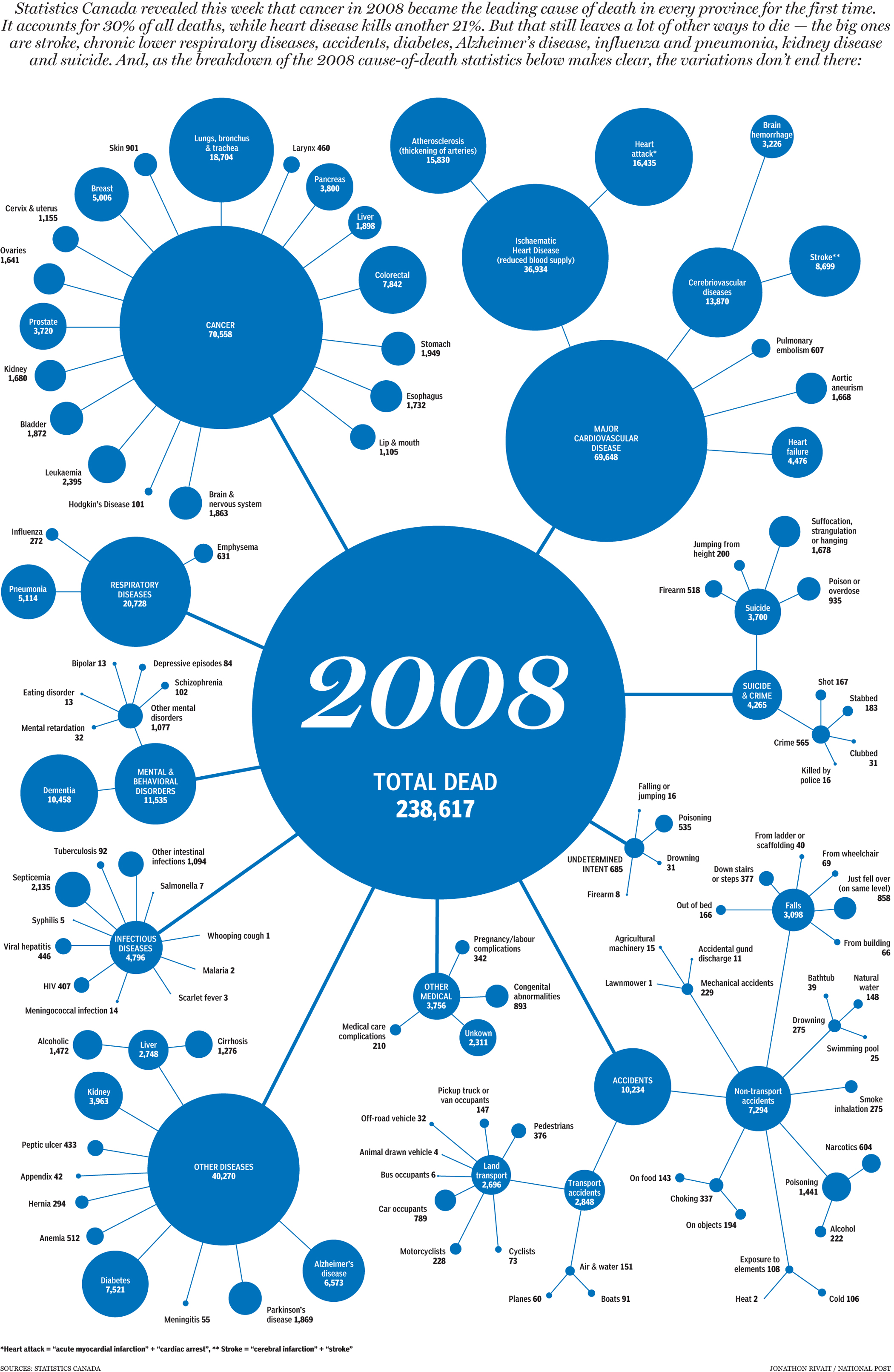
I'm tired of writing so I'll leave you with this. A beautifully made graphic of causes of mortality from 2008. It's official, the world is now so safe that most of us die from cancer.

22 November 2011

13 November 2011
Picturequote
"Become who you are." - Nietzsche
I took some photos of my friend Derek a while ago for a project he's been working on for a little over half a decade now. He basically grows out his facial hair and then trims it into some style and documents it with photos. For his final photo he just grew out a gnarly beard.
Anyways, the first photo is a digital photo edited in Photoshop while the second is 4"x5" color slide film. I may have said this before on here, but I have a theory on film/digital photography. Digital photography tries to duplicate reality and does it very well - film does not. Film is a chemical process that was refined for roughly the last 100 years. The object was not to look real; it was to please the photographer, and to that end each manufacturer makes several types of color film that produce slightly different hues. My personal favorite is Fuji RDPIII (Provia). What's interesting to me is that digital photographers spend a lot of time in Photoshop making their digital photos look like film (think of all the iPhone apps that do this) not because they want it to necessarily to look like film, that may be what they're going for, but in reality they're just trying to make Reality (with a capital "r") look more pleasing; which is what film does. Film is a tangible interpretation of what humans find aesthetically pleasing.


The Internet is Dead, Long Live the Internet
If you're at all interested in the evolution of internet technology and human computer interaction then you should watch this TED talk. The beauty of this particular talk is that the speaker, Roger McNamee, gives names and assigns trends to a lot of the phenomena that I think a lot of us have felt in our interaction with the web - but haven't, up until now, had a name for.
03 November 2011
Income Inequality Addendum
The CBO (Congressional Budget Office) just released a report showing growth in incomes and growth in income as a share of overall income.
This first one shows growth in income over the last 30 years among the various quintiles (each 20% of the income spectrum). The gains were as follows:
275% for the top 1 percent of households,
65 % for the rest of the top quintile
< 40% for the second, third, & fourth quintile
18 percent for the lowest quntile

So everyone's income grew, that's good, but here are the gains as a whole (taken from Krugman).

Not so pretty. Also, that top 1% could be broken down further. I like to think of this as market share. Basically there's a pool of something - customers, income to be had, etc. - and there are entities vying for control of that pool. Well, the 99% is losing out.
This first one shows growth in income over the last 30 years among the various quintiles (each 20% of the income spectrum). The gains were as follows:
275% for the top 1 percent of households,
65 % for the rest of the top quintile
< 40% for the second, third, & fourth quintile
18 percent for the lowest quntile

So everyone's income grew, that's good, but here are the gains as a whole (taken from Krugman).
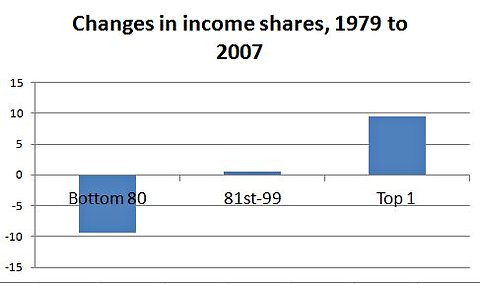
Not so pretty. Also, that top 1% could be broken down further. I like to think of this as market share. Basically there's a pool of something - customers, income to be had, etc. - and there are entities vying for control of that pool. Well, the 99% is losing out.
02 November 2011
Occupy is Right, Stop the Skepticism and Apathy
I've been unexpectedly alone among my friends in my support for the OWS movement and it's bothering me quite a bit. I'm convinced that most people are completely unaware of just how one sided our society is. Further, all the critiques I've heard of OWS is the same utter crap that the news media (see: owned by rich white conservative men) spouts. Here are the three main gripes I hear about the Occupy Movement:
1- "They don't have a clear message."
Yes they do. OWS is fighting against economic and political inequality. They want everyone to pay their fair share. And they're right. The system is broken and unfair.
2- "There's a bunch of weirdos at their protests."
There always is. In the 1960's there were a lot of LSD dropping and free-sex having protestors, but out of it came the civil rights movement, women's rights, and anti-war protests. Does that invalidate them?
3- "They're just bitching. They/we don't have it that bad. Plus, nothing is going to change."
That's utter apathy and it misses the point. Sure, a lot of us live quite well in the bottom 99%, but even as our country has grown richer in the last 30 plus years our share has not increased. Study after study shows that wealth inequality is bad for just about everything in a society from crime rates to levels of happiness. Even the richest are better off in a more fair society.
Evidence:
First, here's the past 100 years or so of income distribution in the US as given by the New York Times:

Currently the top tax rate is 35% for any income made over $379,150 and that doesn't include capital gains (money made on stocks, interest, etc.) which is currently taxed at 15% (really low). It is common to hear people saying that high taxes are bad for an economy. Yet, during America's greatest economic growth, post WWII to somewhere in the 1980's, the top marginal income tax rate was between 70-94% and included capital gains. So no, high taxes are not bad for an economy (see: Northern Europe).
It has come to my attention that the chart that was once here contained some incorrect information. I will repost this when they release the new data (hat tip: Joe). The chart showed varying effective tax rates among similar income earning groups compared with various levels of income earners. The point was that a percentage of the very wealthy pay a very small effective tax rate.
Income Inequality is bad for EVERYONE.
The more a country taxes the rich the happier its people. It's really just a small part of that video from above.
Also, the top 1% is misleading. It's more like top 0.1% (both of these graphs are taken from Krugman's analysis of CBO data):


Solutions:
There was a study done a little over a year ago that I wrote about before where people of all ages and political affiliations were asked who had the wealth in America.

Of course, everyone was totally wrong. Reality was far more unfair than they had realized. In fact, when asked what the division of wealth should be, people overwhelmingly responded that it should be more fair than what they thought it was - which was to generous to begin with.
So how do we fix our system?
Simple, see that bottom line in the graph? That's what people want. That's the society Americans say they want to live in. To accomplish this first we have to elect people who will represent our interests - fairness. Now the fun part, Congress will set goals as to what percentage of the total national income any group is allowed to keep as income. Say the top 0.1% gets 5% of earnings, top 1% gets 5%, etc. Whatever we choose. Next, the IRS and CBO changes the marginal rates (which now include capital gains taxes) of those income tax brackets every year to bring the targeted goals to within range. It'll take a few years to settle out, but eventually the tax brackets will stabilize. If you think that's too socialist or whatever then simple... just lower your targets and let the rich get richer. This is already what we do, we just don't set goals. We just set arbitrary numbers that mean nothing.
My guess is that the vast majority of people would pay less in taxes, more income brackets would be created near the top end, and those really high end brackets rates would be close to 70 plus percent.
Parting Thoughts:
The top 400 wealthiest people in America have more than the bottom 50% (about 155 million people). That means one person has as much as 390,000 people. That's like getting rid of Chicago and replacing it with 7 people.
"No country, however rich, can afford the waste of its human resources. Demoralization caused by vast unemployment is our greatest extravagance. Morally, it is the greatest menace to our social order." -FDR
1- "They don't have a clear message."
Yes they do. OWS is fighting against economic and political inequality. They want everyone to pay their fair share. And they're right. The system is broken and unfair.
2- "There's a bunch of weirdos at their protests."
There always is. In the 1960's there were a lot of LSD dropping and free-sex having protestors, but out of it came the civil rights movement, women's rights, and anti-war protests. Does that invalidate them?
3- "They're just bitching. They/we don't have it that bad. Plus, nothing is going to change."
That's utter apathy and it misses the point. Sure, a lot of us live quite well in the bottom 99%, but even as our country has grown richer in the last 30 plus years our share has not increased. Study after study shows that wealth inequality is bad for just about everything in a society from crime rates to levels of happiness. Even the richest are better off in a more fair society.
Evidence:
First, here's the past 100 years or so of income distribution in the US as given by the New York Times:

Currently the top tax rate is 35% for any income made over $379,150 and that doesn't include capital gains (money made on stocks, interest, etc.) which is currently taxed at 15% (really low). It is common to hear people saying that high taxes are bad for an economy. Yet, during America's greatest economic growth, post WWII to somewhere in the 1980's, the top marginal income tax rate was between 70-94% and included capital gains. So no, high taxes are not bad for an economy (see: Northern Europe).
It has come to my attention that the chart that was once here contained some incorrect information. I will repost this when they release the new data (hat tip: Joe). The chart showed varying effective tax rates among similar income earning groups compared with various levels of income earners. The point was that a percentage of the very wealthy pay a very small effective tax rate.
Income Inequality is bad for EVERYONE.
The more a country taxes the rich the happier its people. It's really just a small part of that video from above.
Also, the top 1% is misleading. It's more like top 0.1% (both of these graphs are taken from Krugman's analysis of CBO data):

The top 20% of income earners haven't gained any income share since the late 1970's while the top 1%'s share has grown from about 8% to about 17% - or more than doubled.

The top 1% minus the top 0.1% share of income has grown from about 5% to 8% - a 60% increase - not bad, but the top 0.1% of earners went from 2.6% to about 8% - about a 300% increase. It truly is the super wealthy who are making all the income gains.
Solutions:
There was a study done a little over a year ago that I wrote about before where people of all ages and political affiliations were asked who had the wealth in America.

Of course, everyone was totally wrong. Reality was far more unfair than they had realized. In fact, when asked what the division of wealth should be, people overwhelmingly responded that it should be more fair than what they thought it was - which was to generous to begin with.
So how do we fix our system?
Simple, see that bottom line in the graph? That's what people want. That's the society Americans say they want to live in. To accomplish this first we have to elect people who will represent our interests - fairness. Now the fun part, Congress will set goals as to what percentage of the total national income any group is allowed to keep as income. Say the top 0.1% gets 5% of earnings, top 1% gets 5%, etc. Whatever we choose. Next, the IRS and CBO changes the marginal rates (which now include capital gains taxes) of those income tax brackets every year to bring the targeted goals to within range. It'll take a few years to settle out, but eventually the tax brackets will stabilize. If you think that's too socialist or whatever then simple... just lower your targets and let the rich get richer. This is already what we do, we just don't set goals. We just set arbitrary numbers that mean nothing.
My guess is that the vast majority of people would pay less in taxes, more income brackets would be created near the top end, and those really high end brackets rates would be close to 70 plus percent.
Parting Thoughts:
The top 400 wealthiest people in America have more than the bottom 50% (about 155 million people). That means one person has as much as 390,000 people. That's like getting rid of Chicago and replacing it with 7 people.
"No country, however rich, can afford the waste of its human resources. Demoralization caused by vast unemployment is our greatest extravagance. Morally, it is the greatest menace to our social order." -FDR
26 October 2011
A Real Water World
About a month ago I wrote about the possible cancelling of the James Webb Space Telescope program. I see such an action as a symbolic gesture of our countries larger unwillingness to invest in science and infrastructure. On a more literal level this is why you need the JWST.
09 October 2011
Craftsmanship
Just two quick examples of extremely high quality work done by hand that caught my attention.
This guy makes all mahogany bicycles by hand. If you search around his site you can see the plys before they're worked and finished (hat tip: Steve U.)

Solid marble, carved by hand, 2.5 tons... original article here (hat tip Dan M.).

This guy makes all mahogany bicycles by hand. If you search around his site you can see the plys before they're worked and finished (hat tip: Steve U.)

Solid marble, carved by hand, 2.5 tons... original article here (hat tip Dan M.).

06 October 2011
Making Mead - Batch #1
I'm jumping the gun a bit here since I haven't posted photos of how Vija and I harvested honey from our beehive, but none the less.
About two weeks ago I picked up a book called The Complete Meadmaker along with some additional brew equipment since my friend Chris had given me some as a gift. Just to clarify, mead is basically honey wine. It was the preferred drink of the vikings and is thought to be one of if not the oldest fermented beverage on earth. People have been making it for at least 9,000 years.
I decided on two 1-gallon batches of traditional sweet mead. I opted for a method that involves no heating. It can be risky in that wild yeast could take over the fermentation, but 80% of brewing beer/mead is sterilizing everything, so it shouldn't be a problem.
The ingredients are:
3 or 2.2 pounds of honey - in this case south side of Chicago unpasteurized wildflower
1/2 pouch of Wyeast Sweet Mead yeast
1/2 gram of Wyeast yeast nutrient
Filtered water to fill up the rest of the 1 gallon carboy
The only equipment needed was a few 1 gallon glass carboys; a hydrometer; a hydrometer beaker; some airlocks and rubber stoppers, and eventually I'll need a siphon hose; capper/corker; caps/corks; etc.
Obviously I'm running it as a bit of an experiment. The IV is the amount of honey added. One batch got 3 pounds of honey while the other got 2.2 pounds. The idea is that, according to the book, every 0.2 lbs. honey/gal of must (that's the honey water mixture that ferments into mean) you get roughly 1% ABV (alcohol by volume).
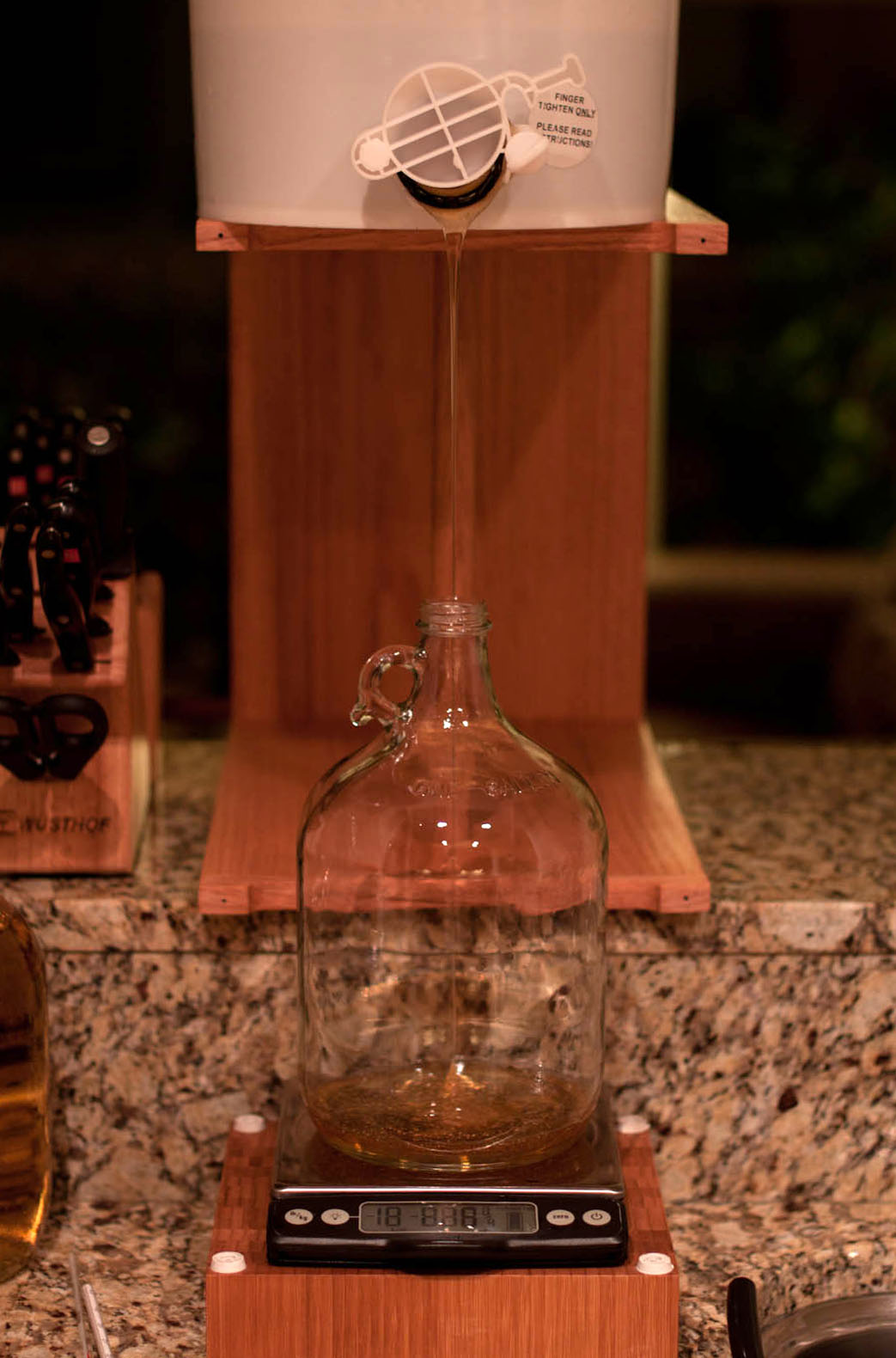

The water honey mix.

Mixing and aeration is supposedly key to the initial steps of fermentation.

A hydrometer tells you how dense your must is. 1.000 is water. If something has a specific gravity (SG) of 1.11 as in this case then it is 11% heavier than water. Water being 8.33 lbs/gallon that makes this about 9.25 lbs/gallon. When it's done fermenting it should have a SG reading of around 1.0 again. They should finish in the 10-15% ABV range; I'm not very experienced so we'll see. Sweet meads tend to be less alcoholic

This is the fermenting must two weeks in. The one on the left is the 3 lbs and the right is the 2.2 lbs. The fermentation took about 48 hours to really pick up and the airlocks on top have been busy ever since giving off CO2.

27 September 2011
This Weeks Videos
This Carl Sagan video is a must see. I've blogged about him before as he is easily one of the most insightful humans to have every existed.
An interview with Al Jean, the executive producer of the Simpsons, explains to the NYT the now infamous Banksy opening.
One of the better TED talks I've seen in a while. It's about mycelium - mushrooms.
An interview with Al Jean, the executive producer of the Simpsons, explains to the NYT the now infamous Banksy opening.
One of the better TED talks I've seen in a while. It's about mycelium - mushrooms.
21 September 2011
Who Are We?

Just a quick note.
The US is the best country in the world because we do things that other people think won't work or can't be done. Not because we are the most fair or have the best healthcare or because our foreign policy is even tolerable. No, people look up to us because we get shit done.
Well, congress is thinking of shutting down the James Webb Space Telescope (JWST) project that NASA has been working on since 1996. The JWST is a technological marvel that will enable astronomers and physicists to peer far deeper into space than Hubble currently does. It is a mammoth undertaking.
The technology created for projects like this eventually find their way into consumer products, and in the mean time they help advance science and push the limits of engineering and the like.
What American doesn't look back on all of our great achievements without some tinge of pride? Why do we so deeply want to be just another country that aspires to nothing other than our own comfort and entertainment?
19 September 2011
Walnut and Steel Coffee Table
I just finished making this walnut and steel coffee table for a friend. It cost $250 in material and measures 45" square and 18" high. This is my first attempt at building something with high-end materials that's more affordable and light weight.
I didn't document the production process as well as I usually do, and many of these photos are from my camera phone. It's really hard to stop what you're doing and pick up a camera at every step but as a learning tool it's almost always worth it.
 |
| These are some quick sections trying to figure out the edge detail. |
 |
| This is how the details were actually made using 4/4 walnut and 1 1/4" x 1/8" thick angle iron. |
 |
| The boards are joined on the short edge with dominos with beech and glue then they're clamped. Those strips on top are the end grain glue-ups/solid strips that make up the underside edge. |
 |
| Prior to oil. |
 |
| After the first coat of oil. |
 |
| Marking the bent corners with a scribe prior to cutting them on the bandsaw. I left thickness on the backside for the opposite flange. |
 |
| The legs are bent, then welded on the backside of the miter. |
 |
| This was my first time using a MIG - I learned on a stick / arc welder. |
 |
| The frame uses 36' of 1 1/4" angle iron (it comes in lengths slightly longer than 20'). The legs and frame are four of the exact same pieces butt welded to one another near the corner. The cross member is needed as the walnut would be too thin to support a substantial load. |
 |
| More walnut furniture in Crown Hall. Teak oil finish - about 6 coats taken to 320 grit and buffed out with #0000 steel wool. The top is 4/4 (3/4" walnut) with strips of 1 3/8" wide walnut on the underside with grain set perpendicular to the top boards to give the appearance that the table is actually made of boards going opposite directions. Not sure how I feel about that - it's kind of dishonest (in the Dieter Rams sense). |
 |
 |
| The typical rule for coffee tables is to make them 2/3's the length of the largest couch and the same height as the top of the seat cushion. In this case that makes the table 45" square and 18" high. |
 |
| Corner detail. |
 |
| I took some steel wool to the metal frame before rubbing some boiled linseed oil onto it. After about 15 minutes you wipe off the excess. This both protects the steel and makes it darker and leaves a sort of waxy feel to it. This is what farmers used to use to protect their tools from rust. |
Paul Krugman

Liberal or conservative, anyone I espouse Krugman's ideas to gets uncomfortable/mad. Which is interesting because his track record on macro is the best of anyone out there. That and he offers actual solutions. Here's one of his latest.
Subscribe to:
Posts (Atom)