Turns out no one died because of the Fukushima Power Plant Disaster. In fact, no one even got radiation poisoning. A nearly perfect example of neglect of probability when compared to other sources of energy.
Finland gives all new mothers a box full of essential supplies. "It's a tradition that dates back to the 1930s and it's designed to give all children in Finland, no matter what background they're from, an equal start in life."
The Obama Administration now judges the negative externality associated with carbon emissions as 60% higher than last year. Climate change is starting to grow some teeth.
Humans of New York - the Chess Hustler.
A different perspective on the Obama administration "scandals" of the last few weeks.
Cornell West is classy as hell.
I've been ranting for a while now about how full adoption of solar will change our world. Well, the utility companies think so too.

Showing posts with label energy. Show all posts
Showing posts with label energy. Show all posts
06 June 2013

22 April 2013
Gasoline Prices, Cheap as Ever
I can't bear to hear people make statements that are demonstrably false.
"Gas prices are so high!"
No, they're low compared to the rest of the world and adjusted for inflation they're about the same as they've ever been in this country, so stop saying it. You're lying.
Average is EUR 1.39 per liter.
1.39 x $1.30 (conversion to USD) x 3.78 (liters in a gallon) = $6.83 / gallon (premium grade)
The current average in the US is $3.85 / gallon of premium, so about half of what Germany pays ($7.76).
"Gas prices are so high!"
No, they're low compared to the rest of the world and adjusted for inflation they're about the same as they've ever been in this country, so stop saying it. You're lying.
 |
| Source |
1.39 x $1.30 (conversion to USD) x 3.78 (liters in a gallon) = $6.83 / gallon (premium grade)
The current average in the US is $3.85 / gallon of premium, so about half of what Germany pays ($7.76).
 |
| Same as it ever was. Source: NYT |
02 March 2013
Sunday Reading
Interview with the pilot of the Enola Gay from 2002.
A star "only" 190 light-years away is about 14.5 billion years old making it about the same age as the universe.
PhD neuroscience grad Greg Dunn makes beautiful neuron inspired art.

An interview with Marshall Brown, a former professor of mine from IIT. His urbanism class was fantastic. It reminded me of my psych undergrad just making you skeptical of everything.
Natural gas is so cheap in the US that we need to export it. Granted that's not entirely legal yet.
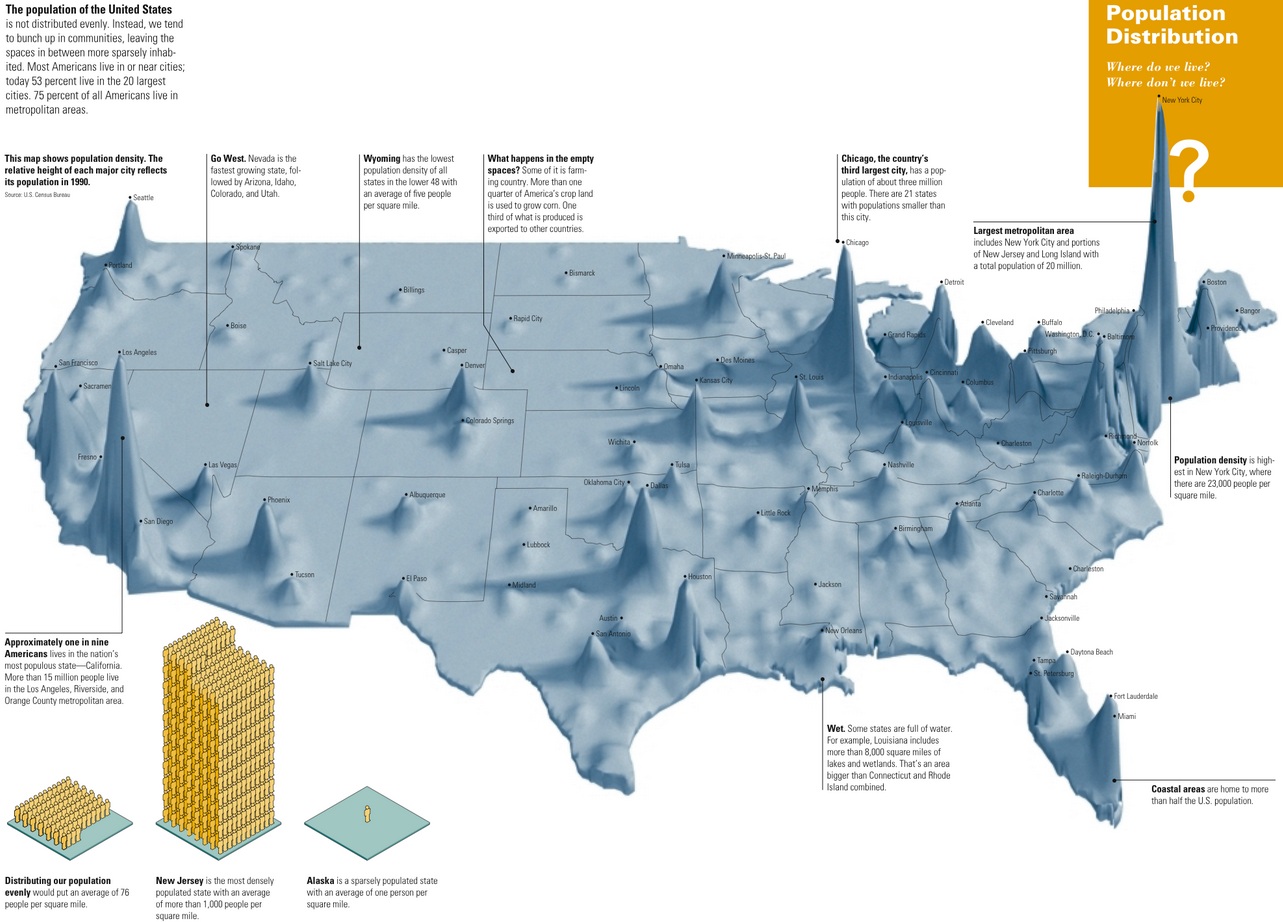
Nice graphic of population density in the US.
A star "only" 190 light-years away is about 14.5 billion years old making it about the same age as the universe.
PhD neuroscience grad Greg Dunn makes beautiful neuron inspired art.
An interview with Marshall Brown, a former professor of mine from IIT. His urbanism class was fantastic. It reminded me of my psych undergrad just making you skeptical of everything.
Natural gas is so cheap in the US that we need to export it. Granted that's not entirely legal yet.
Nice graphic of population density in the US.
A TED talk on data for international school performance, a tad dry but very good.
17 February 2013
Donating Your Idle Computer Time for Scientific Research
I've been hearing about networked super-computing for a while now so I thought I'd check it out this weekend by setting up my computer on the BOINC network. It was originally designed for SETI@home and later expanded to other areas of scientific research. I signed up for SETI@home (search for extra terrestrial intelligence), POEM@home (protein optimization with energy models, medical research), World Community Grid, and a few others.
My computer is fairly well suited for it too since it's overclocked, water cooled, and has a high-end 8-core processor, but I was curious about the energy usage. I have an electrical tester and I made a short extension cord with individual wires so I can measure amperage (second photo).
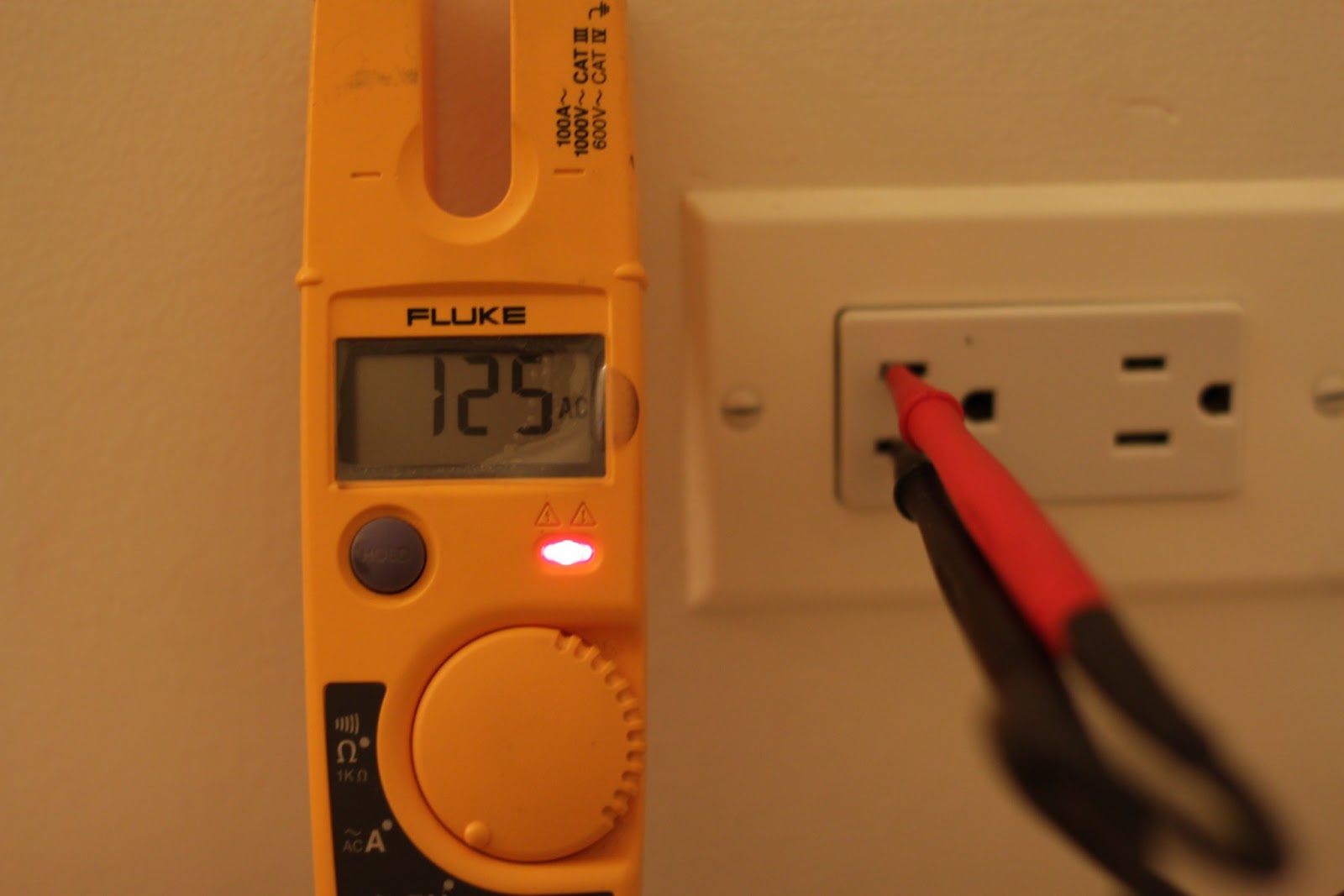 |
| First check the voltage. |
 |
| This is the computer at idle / regular light use., 0.4 amps. |
 |
| This is the computer running BOINC (100% CPU and GPU), 1.4 amps. |
1000 watts in one hour = 1 kilowatt hour (kWh) = $0.10 in Chicago
Idle / typical - 50 watts (125V x 0.4A) = 12 cents/day, $3.60/month, $44/year
Running BOINC - 175 watts (125V x 1.4A) = 42 cents/day, $12.60/month, $153/year
There's also a lot of heat given off by the computer, 3.4 BTU's per watt/hour. That's about 600 BTU's (that'd be like adding three people to a room). For what it's worth I figured that during this January it took an average of 6,000 BTU's/hour to heat our apartment (all glass walls, all electric heat... ugh). Long story short it makes sense for me to lend my computers processing power during the cold months in Chicago, but as soon it gets warm out it would start to impose a decent burden on me since I'd have to both pay for the electricity for the extra processing power and the additional AC required to cool said heat generated by the computer. In the mean time I might as well let my computer crunch numbers as opposed to letting the electric baseboard heaters do essentially the same thing without finding the cure for cancer or ET.
And now the real point of this post; networked infrastructural sharing as it relates to electrical generation - it has many other applications too.
The key insight here, as it relates the networked computing, is that there is an enormous amount of power generation potential in the form of idle cars - just like idle personal computers. Our collective cars have over 35 times more power generating capability than all the power plants in the US. Each power source is about as efficient as the other1.
The way electrical distribution works right now is fairly straight forward. A network of large plants create huge amounts of energy, mostly from burning hydrocarbons, and then send it through a network to users.
large scale power generation > network > end user
Large power plants are being built at a much slower rate than in the past. Micro-scale sources like solar now make up the majority of added power generation. The paradigm seems to be shifting to:
small scale generation that's very spread out / end user > interconnected grid > end user
Basically, energy and distribution is increasingly starting to look like how the internet works. To be fair the actual numbers are quite low right now, but the trend is rather stable. Over the last decade there has been more capacity added to our electrical grid in the form of micro power sources (solar panels and the like)(comparable to my single personal computer) than there has been traditional large scale power plants (comparable to a super computer).
To add to this, if cars were electric they could plug into the grid and act as a sort of buffer for renewables and traditional power plants. It seems that by distributing the generational capabilities it would become more stable in both reliability and potentially price since the market paradigm would shift from monopolies to pure competition (this is a bit facile but I don't want to get off topic).
This is a trend that is apparent in many other aspects of our lives and technologies, but I chose this example because it made me think about my incentives to loan my computer to scientific research. Currently if you have solar panels on your home and you generate more power than you consume it goes back into the grid2. The systems are designed to try to balance out your use and how much your array generates because, at least in Illinois, the utility company won't give you any money if you generate more power than you use. It's really dumb. It creates no incentive for people to add additional capacity. Currently networked supercomputing is viable because it's for a good cause, but why not use it for business purposes too and actually pay users for their resources? It'd be like Zip Cars except Zip car doesn't even need to buy cars, so long as the numbers make sense it seems like an efficient thing to do. In this case especially since nothing tangible is actually being handled by the borrower.
The question is no longer, will solar take off? Is wind viable? Yes, it can be and it's increasingly the reality we live in - which I'm excited about. The real question is how will the incentives be aligned? Will we invest in a smart grid to share our personal small scale power generation capabilities? Will electric cars that act as an energy bank become the norm? Will people get paid to generate power, to let their car drain a bit at 1:00 PM on July 1st when everyone in the US has an air conditioner running? What are the liability laws like if you generate lots of power in a remote area then cut it off leaving others without power? These are serious legal and infrastructural questions that will shape our coming world.
As the rate at which technology advances increases it seems that many of our most pressing problems are political in nature. People have to come together and do some big things. Technology advances exponentially whereas human understanding and will power do not, and it's becoming increasingly apparent. I work for men who are a few generations ahead of me. I learn a lot from them and vice versa, but they're also stuck in a world that's very pre-1990's America. Expensive office space. Everything of value is tangible. Exploitation of workers is the profit margin. Microsoft Office. Email addresses provided by your ISP. These people control our world and I'm not convinced they're aware that the internet and all that comes with it has radically changed our world.
1 - The average car is about 25% efficient while a power plant is generally in the low 30's then some distribution loss.
2 - It's called a net meter. Your meter literally spins in reverse when you're generating more power than you're consuming.
14 May 2012
I Think I Graduated from Architecture School?
I haven't written on here in a long time. I didn't realize it until lately but my thesis project more or less just replaced this blog for the time being.
These are truly gems of TED talks:
Amory Lovins: A 50-year plan for energy
Perspective Is Everything
These are truly gems of TED talks:
Amory Lovins: A 50-year plan for energy
Perspective Is Everything
04 May 2011
The Cost of Energy
I was working on a project for school that looked at the benefits of solar hot water heating equipment and I ran into something odd. Solar hot water heating panels look like regular solar panels but they're usually solid black and water is pumped through them. They're fairly common to see because unlike solar panels that produce electricity (in many cases, lets not get into it) they actually pay for themselves. But there is an interesting oddity to them. They are generally meant to replace the quantity of natural gas needed for heating water, but natural gas is cheap. So even though they save a large amount of energy they do not in fact save that much money. Here is why:
Here I'm showing the three most commonly bought forms of energy: natural gas, electricity, and gasoline.
Natural gas is sold in therms.
1 therm = 100,000 BTU's (British thermal units)
Cost per 100,000 BTU's = $0.86 (in Chicago currently, it's usually about a dollar)
Electricity is sold in kilowatt hours (kWH - 1000 watts for one hour).
1 watt = 3.412 BTU's so a kWH is 3,412 BTU's.
Cost = 12 cents per 3,412 BTU's
Cost per 100,000 BTU's = $3.52
Gasoline is sold by the gallon.
1 gallon of gasoline = 125,000 BTU's
Cost = $4.50 (in Chicago currently)
Cost per 100,000 BTU's = $3.60
So natural gas is more than four times cheaper than other forms of energy per unit. This is why heating my apartment with electricity is stupid. It was cheap for the contractor to put in electric radiant heat washes near the windows but it's incredibly expensive for me to run. The price of electricity is almost double on the west coast ($.025/kWH) and the east coast ($0.20/kWH). Say what you will but nuclear energy makes energy relatively cheap for the Midwest.
When you change the cost of an input, in this case energy, it changes behavior - not really shocking. Doubling the price of electricity causes people to buy more solar panels because it becomes cost effective.
In Chicago it can get up to 100F in the summer - about 30 degrees warmer than we'd like. In the winter it can get to -10F - roughly 80 colder than we'd like. Thus, it takes more energy to heat our homes than it does to cool them. From an environmental/ecological point of view we should live in a warmer climate, but monetarily an 80F difference divided by 4 times cheaper energy because we're using natural gas and not electricity means it's actually cheaper to heat our homes in winter than it is to cool them in the summer with electricity. This is how the cost of something can create perverse incentives.
What is shocking is that no one has figured out how to arbitrage this situation. Why don't any cars run on natural gas or why don't people produce their own electricity from natural gas? The answer is of course in the up front costs of doing such things. Generating your own power is expensive an inefficient. Most generators are roughly 20%-40% efficient...
11 December 2009
Backlog of Links Part 1
Must read: the national debt clock runs out of zeros.
Must read: Nathan Mhyrivold (former chief tech officer at Microsoft) started an R&D group composed of chemists, chefs, and artists to produce... a cookbook - of scientific proportions.
Missle silo bachelor pad, must see.
3D fractal renderings (from Wired). I have some odd feeling that this is the distant future of architecture. Think about it... you could build an entire structure using the same mass produced piece, and accuracy would be nearly perfect.
Paul Krugman on why the Fed is powerless to do anything and shouldn't raise rates for a long time.
The Scots really do invent everything. There are actually a few I think they left off the list (for example the ghillie suite of WWI that snipers still use for camouflage to this day, the Scots used it to catch livestock poachers). I had been planning to write a whole long post about this, but apparently someone else has watched too much History Channel too and noticed that everything during the industrial revolution was invented by people from the poorest country in Europe.
A tour of the Leica factory... ugh. Anyone got $11,000 for one of those f .95 Noctilux lenses? They make one of the nicest 35 mm cameras and possibly the best glass (lenses) in the world.
New earthquake proofing technology in Istanbul looks impressive as hell.
Videos of rockets exploding during launch including a 1 billion dollar spy satellite.
Military Youtube... sort of. The military can record footage of an entire area, say a city, and if there's a bombing they can basically rewind the tape and see who planted the bomb...? Just read it.
Most sushi you eat isn't what it says it is. Many of the fish are from protected or over fished areas.
Interesting geodesic domes in California.
This has been a long time coming. Road trains. Safer, faster, more efficient.
Foreign Policy Magazine posted a collection of beautiful photos of slums.
Hahahaha, fuck Vista.
A movie gets pirated all over the internet, it's producers are ecstatic; finally.
This is mostly for my reference. Microscale chart... fun.
Wonkish developmental economics talk about the inability to explain growth in the third world - the drunkard's walk.
Scientists say waterboarding is bad... apparently people will tell you anything when they're being tortured.
Philosophical musings as to whether or not we exist.
Recession over - like 3 months ago.
Hilarious - dead salmon fools fMRI.
Plug and charge, cool but... dumb. If it isn't cheaper than conventional energy, or somehow provides something that is more convenient then it won't work economically. Still interesting though.
Plants recognize and react differently to their siblings.
Nudge - how to make more people use the stairs. Psh, turn them into a piano obviously.
Someone finally won the Netflix Prize which was basically a million dollars given out to the team that could improve Netflix's own movie recommendation algorithm by more than 10%.
America's infrastructure is failing massively, not very surprising. Wired talks about the lack of any current "super projects" in the US and the America Society of Civil engineers say we need to spend 2.2 trillion dollars on infrastructure just to bring it up to par. Yikes... this is interesting to me because people don't realize how much these things affect everything. Roads, water, electricity - these are the basic things that allow America to have a strong economy. It's so basic it's painful.
Must read: Nathan Mhyrivold (former chief tech officer at Microsoft) started an R&D group composed of chemists, chefs, and artists to produce... a cookbook - of scientific proportions.
Missle silo bachelor pad, must see.
3D fractal renderings (from Wired). I have some odd feeling that this is the distant future of architecture. Think about it... you could build an entire structure using the same mass produced piece, and accuracy would be nearly perfect.
Paul Krugman on why the Fed is powerless to do anything and shouldn't raise rates for a long time.
The Scots really do invent everything. There are actually a few I think they left off the list (for example the ghillie suite of WWI that snipers still use for camouflage to this day, the Scots used it to catch livestock poachers). I had been planning to write a whole long post about this, but apparently someone else has watched too much History Channel too and noticed that everything during the industrial revolution was invented by people from the poorest country in Europe.
A tour of the Leica factory... ugh. Anyone got $11,000 for one of those f .95 Noctilux lenses? They make one of the nicest 35 mm cameras and possibly the best glass (lenses) in the world.
New earthquake proofing technology in Istanbul looks impressive as hell.
Videos of rockets exploding during launch including a 1 billion dollar spy satellite.
Military Youtube... sort of. The military can record footage of an entire area, say a city, and if there's a bombing they can basically rewind the tape and see who planted the bomb...? Just read it.
Most sushi you eat isn't what it says it is. Many of the fish are from protected or over fished areas.
Interesting geodesic domes in California.
This has been a long time coming. Road trains. Safer, faster, more efficient.
Foreign Policy Magazine posted a collection of beautiful photos of slums.
Hahahaha, fuck Vista.
A movie gets pirated all over the internet, it's producers are ecstatic; finally.
This is mostly for my reference. Microscale chart... fun.
Wonkish developmental economics talk about the inability to explain growth in the third world - the drunkard's walk.
Scientists say waterboarding is bad... apparently people will tell you anything when they're being tortured.
Philosophical musings as to whether or not we exist.
Recession over - like 3 months ago.
Hilarious - dead salmon fools fMRI.
Plug and charge, cool but... dumb. If it isn't cheaper than conventional energy, or somehow provides something that is more convenient then it won't work economically. Still interesting though.
Plants recognize and react differently to their siblings.
Nudge - how to make more people use the stairs. Psh, turn them into a piano obviously.
Someone finally won the Netflix Prize which was basically a million dollars given out to the team that could improve Netflix's own movie recommendation algorithm by more than 10%.
America's infrastructure is failing massively, not very surprising. Wired talks about the lack of any current "super projects" in the US and the America Society of Civil engineers say we need to spend 2.2 trillion dollars on infrastructure just to bring it up to par. Yikes... this is interesting to me because people don't realize how much these things affect everything. Roads, water, electricity - these are the basic things that allow America to have a strong economy. It's so basic it's painful.
04 August 2009
Where Energy Comes From and How We're Going to Collect It
Warning: wonkish and a tad trippy if you've never thought about this stuff.
The reason why understanding this is fundamental is because it proves that given the appropriate amount of time solar and its related technologies will become viable. We haven't even come close to tapping direct solar energy as a resource. Conversely, things like clean coal may be necessary in the short run, but they are clearly not ultra-long term solutions. The solar industry says that they are already competitive without any of the huge leaps that the media and government have said were needed to make it competitive with fossil fuels.
Side note: If fossil fuels are properly taxed to include their negative externalities this will instantly make renewables more competitive by revealing the true cost of burning fossil fuels. I know it seems crazy, but paying more for your gas (in this case due to a rise in taxes) will help everyone in the long run.
So what's the latest and greatest on these technologies? Wind turbines are being rethought to make them cheaper. This includes turning them around, allowing the blades to flex so as to capture additional gusts of wind, and using just 2 props. Solar-thermal, one of my favorites due to its sheer simplicity, just got modular. GMO's in the form of bacteria that eat CO2 and sunlight (sounds like my mum) have been engineered to create an ethanol like fuel. And then there's the grand daddy, literally, of them all; fusion. Long shot? This approach might be, but one day in the not so distant future (less than 80 years is my prediction) this will be the single greatest source of energy for humans. Not including the sun...
It's worth noting that the majority of your electricity bill is determined by costs associated with transmission and generation; not the cost of whatever is being burned to produce the energy, so realistically nanopower - that is, self powered buildings should become the norm.
All the available energy on earth; whether it be oil, bio-fuel, or wind power; comes from the sun.
Well mostly... geothermal energy comes from fissures in the crust of the earth which release energy derived from the intense gravity experienced in the core of the earth which causes rocks to melt into magma deep within the earth allowing us to capture steam. Which is similar, in the sense that gravity causes all the hydrogen to compress, to the sustained fusion reaction that is our sun.
Anyways, outside of geothermal, all energy on earth comes from the sun. Oil and coal are just ancient organic material (things that used to be alive like plants and animals) that has been allowed to sort of ferment into a primordial soup that we can extract and crack in a refinery and use for fuel. It is literally stored sunlight. Wind power is made possible by the sun heating up the earth as it rotates causing warm and cool spots which changes the density of air and causes it to seek an equilibrium density - that is, move. Hydroelectric is just solar energy causing water to evaporate, rain, and then give up its potential energy as it runs downhill. Solar is pretty self explanatory. Nuclear is the exception. Then again it's also imitating how the sun produces energy... or the exact opposite. Whatever.
The total amount of energy hitting the earth is 174 Peta watts (10^15 watts) per day. Of that about 89 PW actually make it through the atmosphere and hit the earth (that much energy could run a 14 watt compact fluorescent light bulb for 730 billion years... or about 50 times longer than the age of the universe). Without going into space, without using stored energy, assuming 100% efficiency, by stealing light from every other organism - that is the amount of energy available to us. Our Current usage rates seem to be on the order of 15-16 Terra watts (10^12)(as of 2005).
So... (8.9 x 10^16 watts)/(1.6 x 10^13 watts) ~ 5600
Meaning that if we could capture 1/5600 or .018% of the energy hitting the earths surface we could meet all our current power demands.
Currently about 80%-90% of our energy comes from non-renewable resources like coal and gas. That is, stored sunlight. So that means that 10-20% comes directly from the sun. Let's take the more optimistic of both figures; 20% renewable and 16 TW total usage and you get 3.2 x 10^12 watts.
so...
Total watts from sunlight available for collection (89 PW) divided by current watts actually collected (3.2 TW) equals roughly 28,000. So currently we're collecting 1/28,0000 or .0036% (at best) of the energy available to us. Way to go team.
The reason why understanding this is fundamental is because it proves that given the appropriate amount of time solar and its related technologies will become viable. We haven't even come close to tapping direct solar energy as a resource. Conversely, things like clean coal may be necessary in the short run, but they are clearly not ultra-long term solutions. The solar industry says that they are already competitive without any of the huge leaps that the media and government have said were needed to make it competitive with fossil fuels.
Side note: If fossil fuels are properly taxed to include their negative externalities this will instantly make renewables more competitive by revealing the true cost of burning fossil fuels. I know it seems crazy, but paying more for your gas (in this case due to a rise in taxes) will help everyone in the long run.
So what's the latest and greatest on these technologies? Wind turbines are being rethought to make them cheaper. This includes turning them around, allowing the blades to flex so as to capture additional gusts of wind, and using just 2 props. Solar-thermal, one of my favorites due to its sheer simplicity, just got modular. GMO's in the form of bacteria that eat CO2 and sunlight (sounds like my mum) have been engineered to create an ethanol like fuel. And then there's the grand daddy, literally, of them all; fusion. Long shot? This approach might be, but one day in the not so distant future (less than 80 years is my prediction) this will be the single greatest source of energy for humans. Not including the sun...
It's worth noting that the majority of your electricity bill is determined by costs associated with transmission and generation; not the cost of whatever is being burned to produce the energy, so realistically nanopower - that is, self powered buildings should become the norm.
18 March 2009
Coal Gasification
First, here's the 4 minute video on coal gasification. It's not quite layman's terms but it's not too bad.
- 80% of the energy in the coal is passed on in the form of natural gas.
- It's cheaper to gasify coal than it is to acquire natural gas conventionally.
- All pollutants (mercury, sulfur, etc.) are sequestored.
16 February 2009
Great Links
Drug money saves banks... "It would appear, that the criminal masterminds of the under ground economy apply 'conservative' leverage and tend to be 'highly liquid'."
Let the government spend. "Bizarrely, however, some Congressional critics have denounced the administration’s stimulus proposals as 'mere spending programs.' Of course they’re spending programs! More spending is exactly what we need."
Google introduces work on a power meter application that allows you to view your real time energy usage online. I remember reading that studies have been conducted showing that by merely placing a meter that allows you to see your energy usage in real time consumption generally drops around 20%.
Cool art prints.
Let the government spend. "Bizarrely, however, some Congressional critics have denounced the administration’s stimulus proposals as 'mere spending programs.' Of course they’re spending programs! More spending is exactly what we need."
Google introduces work on a power meter application that allows you to view your real time energy usage online. I remember reading that studies have been conducted showing that by merely placing a meter that allows you to see your energy usage in real time consumption generally drops around 20%.
Cool art prints.
Solar Tracking Skylights
Here are some actual product shots.
I've been absolutely fascinated by these for a while now. They're basically a 4'x4' skylight. The innovative aspect of them is that they use mirrors to reflect sunlight into the building more effectively than traditional passive skylights. the units achieve this with the use of a solar powered motor and sun tracking system. The unit can track the sun at an angle down to 10 degrees above the horizon.
The other huge benefit is that it doesn't produce heat in the same way that a conventional metal halide or fluorescent light would, so your cooling load is significantly reduced. On a sunny day it produces the equivalent of 800 watts of fluorescent light. At 3.4 BTU's per watt that's about 2,700 BTU's an hour saved on your cooling bill. How much is that? A 12,000 BTU (1 ton) air conditioner is enough to cool down a normal sized 2 bedroom apartment during the summer.
It's also reported that when used in retail locations sales increase by 10-40%; in industrial applications employees call in sick less, are more productive, and are less accident prone; and in comparison to no daylight classrooms, classrooms fitted with this device notice a 6-20% increase in grades (that one is the most suspect though). When you think of how good it feels to be outside in the sun and how terrible winter light (or lack there of) can feel none of these results are that suprising.


I've been absolutely fascinated by these for a while now. They're basically a 4'x4' skylight. The innovative aspect of them is that they use mirrors to reflect sunlight into the building more effectively than traditional passive skylights. the units achieve this with the use of a solar powered motor and sun tracking system. The unit can track the sun at an angle down to 10 degrees above the horizon.
The other huge benefit is that it doesn't produce heat in the same way that a conventional metal halide or fluorescent light would, so your cooling load is significantly reduced. On a sunny day it produces the equivalent of 800 watts of fluorescent light. At 3.4 BTU's per watt that's about 2,700 BTU's an hour saved on your cooling bill. How much is that? A 12,000 BTU (1 ton) air conditioner is enough to cool down a normal sized 2 bedroom apartment during the summer.
It's also reported that when used in retail locations sales increase by 10-40%; in industrial applications employees call in sick less, are more productive, and are less accident prone; and in comparison to no daylight classrooms, classrooms fitted with this device notice a 6-20% increase in grades (that one is the most suspect though). When you think of how good it feels to be outside in the sun and how terrible winter light (or lack there of) can feel none of these results are that suprising.


13 February 2009
The Future of Energy
It wasn't that long ago that I posted this article about the future of electrical consumption. In it I argue for smaller renewable energy generators combined with batteries in new home construction.
Here's a recent article by Amory Lovins about electrical production in the last few years. Lovins is as Freakonomics' Blog puts it "the energy maven's energy maven."
"Global competition between big and small plants is turning into a rout... In 2007, the U.S., Spain, and China each added more wind capacity than the world added nuclear capacity, and the U.S. added more wind capacity than it added coal-fired capacity during 2003 to 2007 inclusive."
The article is worth the read. Lovins basically argues that large centralized plants are being phased out in favor of much smaller generating stations and "micropower." Maybe my ideas just aren't that original.
20 January 2009
Energy; or Electricity and How We Consume It
So I read this article a while back about how we need to vastly improve our network of energy distribution. Naturally, I object. I think it's a wonderful idea, but there is another solution that isn't even being talked about. Better yet, you can combine them both...
Here's my plan. Currently about 7% of the energy produced at a power plant is lost in the grid. Not too bad actually, but 7% is enough to satisfy 21 million people in the US. That's 7 times the population of Chicago proper...
The problem is this. With traditional sources of energy such as gas and coal plants you need to build the generation stations big enough to handle peak demand. Peak demand is something like the hottest day in summer when everyone is running their AC. Low points are 2 AM in the morning when no one is using electricity. Ideally you would have medium sized generators that ran all the time, but because of peak demand the power companies have to bring plants online occasionally to fill demand. They're called peak plants. In fact I've seen some of them. ComEd actually has jet engines it can turn on to spin turbines and meet peak demand. They're cool... but that can't be cheap. Electrical demand has to be matched exactly. There is no fudge margin. Excess gets wasted and if enough isn't produced then things start to fail.
In comes renewables. They aren't very reliable in terms of output. If the wind slows down around a wind turbine farm so does energy production... by a factor of the difference of the cubes, so quickly (an 8 knot wind produces half the power of an 11 knot wind). If a cloud passes over a solar array it produces less energy. Thus, the aforementioned article calls for a newer smarter grid to deal with these things. I agree, it's a good idea to start work on this. But is that the whole solution?
What if most homes (or at least newly constructed homes) had a bank of batteries tied to their own renewable energy generators plus a plug in hybrid car? The car is in this case is essentially just more battery storage potential. Basically, if most homes had a decent battery storage capacity they could store the excess energy from power plants during the night when none is being used. Plus, with the renewables they would offset the peak demand. Think about it. When is peak demand? Midday when it's hottest and the sun is the brightest. So peak is reduced by the usage of renewables, and trough point demand is raised because everyone is charging their cars and banks of batteries. The demand for electricity is now much more flat.
Power plants could becomes smaller, run more consistently, and be more efficient. Then again, no one wants to pay for anything up front. We seem to be more content with paying higher costs indefinately than paying more initially.
Here's my plan. Currently about 7% of the energy produced at a power plant is lost in the grid. Not too bad actually, but 7% is enough to satisfy 21 million people in the US. That's 7 times the population of Chicago proper...
The problem is this. With traditional sources of energy such as gas and coal plants you need to build the generation stations big enough to handle peak demand. Peak demand is something like the hottest day in summer when everyone is running their AC. Low points are 2 AM in the morning when no one is using electricity. Ideally you would have medium sized generators that ran all the time, but because of peak demand the power companies have to bring plants online occasionally to fill demand. They're called peak plants. In fact I've seen some of them. ComEd actually has jet engines it can turn on to spin turbines and meet peak demand. They're cool... but that can't be cheap. Electrical demand has to be matched exactly. There is no fudge margin. Excess gets wasted and if enough isn't produced then things start to fail.
In comes renewables. They aren't very reliable in terms of output. If the wind slows down around a wind turbine farm so does energy production... by a factor of the difference of the cubes, so quickly (an 8 knot wind produces half the power of an 11 knot wind). If a cloud passes over a solar array it produces less energy. Thus, the aforementioned article calls for a newer smarter grid to deal with these things. I agree, it's a good idea to start work on this. But is that the whole solution?
What if most homes (or at least newly constructed homes) had a bank of batteries tied to their own renewable energy generators plus a plug in hybrid car? The car is in this case is essentially just more battery storage potential. Basically, if most homes had a decent battery storage capacity they could store the excess energy from power plants during the night when none is being used. Plus, with the renewables they would offset the peak demand. Think about it. When is peak demand? Midday when it's hottest and the sun is the brightest. So peak is reduced by the usage of renewables, and trough point demand is raised because everyone is charging their cars and banks of batteries. The demand for electricity is now much more flat.
Power plants could becomes smaller, run more consistently, and be more efficient. Then again, no one wants to pay for anything up front. We seem to be more content with paying higher costs indefinately than paying more initially.
10 November 2008
What No One Seems to Understand About Energy
Al Gore has announced that it should be a government mandate to stop using nonrenewable energy sources to make electricity within the next 10 years. A noble goal to say the least, but is it feasible or even right to do so?
First off, I agree that we need to curtail our use of hydrocarbons as soon as possible. Preferably by standardizing blueprints for nuclear power plants and building a ton of them... That being said, no one seems to understand an economic concept that I have never been able to articulate properly. I wonder why... There are a lot of people living on the very edge or poverty that have no savings and live from paycheck to paycheck. I'll get back to that.
The reason that hydrocarbons are used to generate electricity is that it is cheap, so to switch to renewable sources implies a higher cost for electricity. For most of us this shouldn't be a huge deal. Especially as the price of these technologies comes down, but what about those poor people I just mentioned?
Please excuse this analogy but it's the best one I've got. Imagine the human population as a mold growing on a food source. The food source in this case is money and the mold is the world's human population. If money represents our ability to produce the goods we need to survive then as this resource is reappropriated to other uses, such as higher energy prices, there's less money for things like homes and food. This will literally mean that some people will not have the means to survive. Or at least not at their current standards of living. In a colony of bacteria when the food source diminishes the bacteria communicate with one another and collectively "agree" to spread out, eat less, and multiply more slowly. It's actually a really interesting phenomenon that has nothing to do with this... the bacteria will even gang up and attack and single bacteria that doesn't go along with the group. Anyways, that's why places like China won't stop burning coal. To raise the price of energy would mean that it would be out of reach for hundreds of millions of people. They would be collectively agreeing to live below their current standard of living. Unless of course they decided that polluting less increased their standard of living... but that's another story.
The problem is like that of a SUV that you just bought. Gas was $2.00 when you bought the car, but now just a year later say gas is $3.50. The car is just a year old and should be kept for at least another few years (9 really), but the cost of gas has made your purchase much more expensive than you meant it to be. If the life of a car is just a few years it's not a huge deal. They will eventually be replaced by small cars. In the case of humans however, we live on average about 70 something years. What if the real price of living (as opposed to nominal) doubles in someone's lifetime? This is a serious problem.
Technologies can only be adopted as their cost becomes competitive. The only people who can afford electric cars and electricity produced by wind, or really any green technology that ends up costing more than it's hydrocarbon powered equivalent, are the affluent. This isn't something you can just mandate, even if we all agree it's the right course of action. Being green must cost less than the alternative. In my mind the line between "being green" and saving money are one in the same.
First off, I agree that we need to curtail our use of hydrocarbons as soon as possible. Preferably by standardizing blueprints for nuclear power plants and building a ton of them... That being said, no one seems to understand an economic concept that I have never been able to articulate properly. I wonder why... There are a lot of people living on the very edge or poverty that have no savings and live from paycheck to paycheck. I'll get back to that.
The reason that hydrocarbons are used to generate electricity is that it is cheap, so to switch to renewable sources implies a higher cost for electricity. For most of us this shouldn't be a huge deal. Especially as the price of these technologies comes down, but what about those poor people I just mentioned?
Please excuse this analogy but it's the best one I've got. Imagine the human population as a mold growing on a food source. The food source in this case is money and the mold is the world's human population. If money represents our ability to produce the goods we need to survive then as this resource is reappropriated to other uses, such as higher energy prices, there's less money for things like homes and food. This will literally mean that some people will not have the means to survive. Or at least not at their current standards of living. In a colony of bacteria when the food source diminishes the bacteria communicate with one another and collectively "agree" to spread out, eat less, and multiply more slowly. It's actually a really interesting phenomenon that has nothing to do with this... the bacteria will even gang up and attack and single bacteria that doesn't go along with the group. Anyways, that's why places like China won't stop burning coal. To raise the price of energy would mean that it would be out of reach for hundreds of millions of people. They would be collectively agreeing to live below their current standard of living. Unless of course they decided that polluting less increased their standard of living... but that's another story.
The problem is like that of a SUV that you just bought. Gas was $2.00 when you bought the car, but now just a year later say gas is $3.50. The car is just a year old and should be kept for at least another few years (9 really), but the cost of gas has made your purchase much more expensive than you meant it to be. If the life of a car is just a few years it's not a huge deal. They will eventually be replaced by small cars. In the case of humans however, we live on average about 70 something years. What if the real price of living (as opposed to nominal) doubles in someone's lifetime? This is a serious problem.
Technologies can only be adopted as their cost becomes competitive. The only people who can afford electric cars and electricity produced by wind, or really any green technology that ends up costing more than it's hydrocarbon powered equivalent, are the affluent. This isn't something you can just mandate, even if we all agree it's the right course of action. Being green must cost less than the alternative. In my mind the line between "being green" and saving money are one in the same.
EDIT: I re-did my bacteria analogy as it previously made little sense.
29 October 2008
Links
This robo-mule is yet another cool invention by DARPA. I wonder how much this costs? Watch the video.
I read probably three new solar/wind/wave energy system updates every day. This new vortex powered machine is one of the coolest in a while.
Kind of cool calorie measuring/pedometer device. Probably a bad idea for anorexic and workout crazy people.
I read probably three new solar/wind/wave energy system updates every day. This new vortex powered machine is one of the coolest in a while.
Kind of cool calorie measuring/pedometer device. Probably a bad idea for anorexic and workout crazy people.
Subscribe to:
Posts (Atom)